
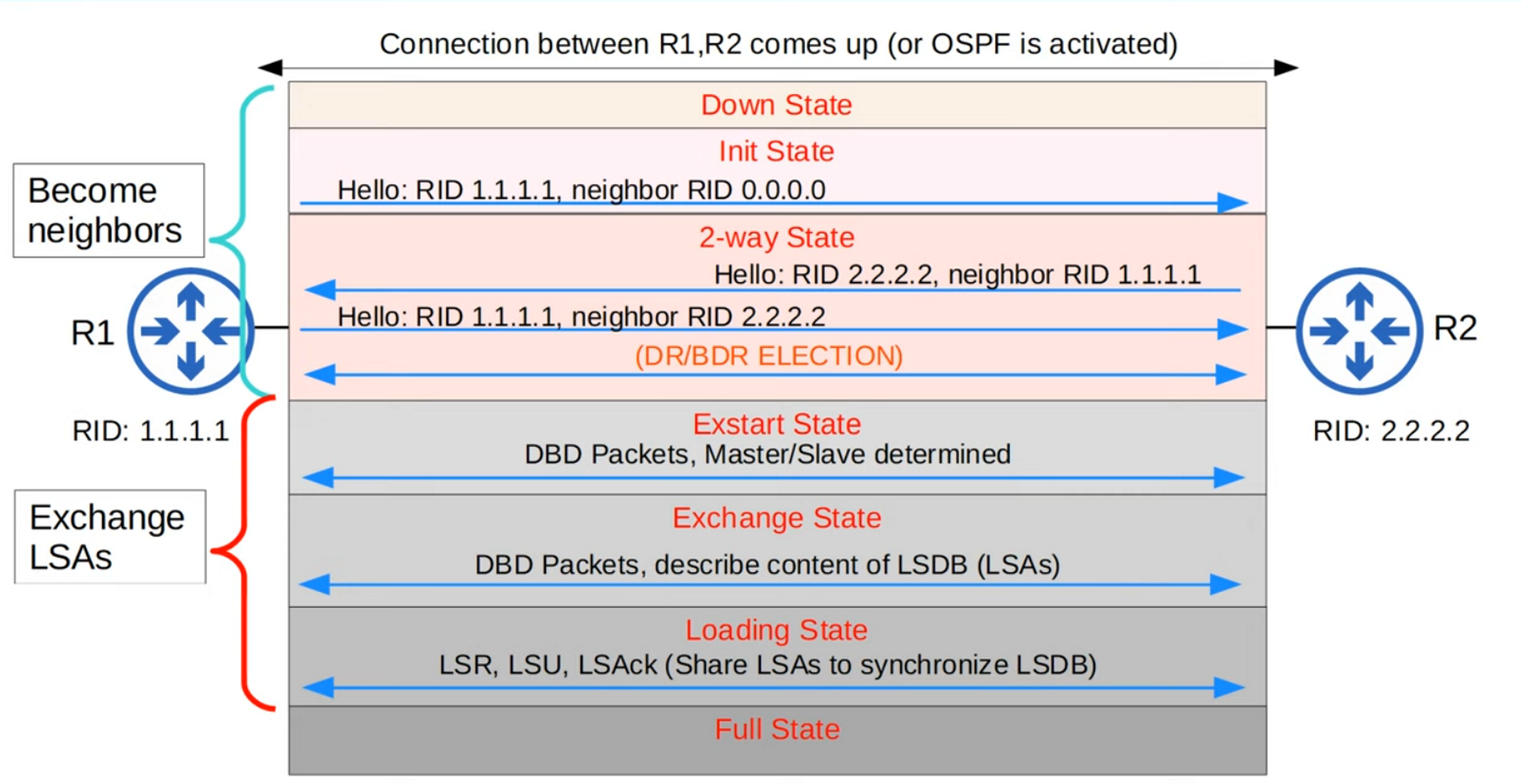
Link-state IGP, metric = cost, Dijkstra (SPF), protocol 89, AD 110, multicast 224.0.0.5 / 224.0.0.6 (DR/BDR). Area 0 is the mandatory backbone.
Router ID & DR election
Router-ID: manual → highest loopback → highest active interface IP. DR election: highest priority (tie: highest RID). Hello/Dead must match between neighbors or no adjacency: 10/40 s on broadcast, 30/120 on NBMA.
LSAs you must know
| Type | Name | Originator | Scope |
|---|---|---|---|
| 1 | Router | every router | area |
| 2 | Network | DR | area |
| 3 | Summary (inter-area prefix) | ABR | between areas |
| 4 | ASBR Summary | ABR | between areas |
| 5 | External | ASBR | whole AS |
| 7 | NSSA external | NSSA ASBR | NSSA (→5 at ABR) |
| 8/9 | Link / Intra-area prefix | OSPFv3 only | IPv6 moves addresses out of types 1/2 |
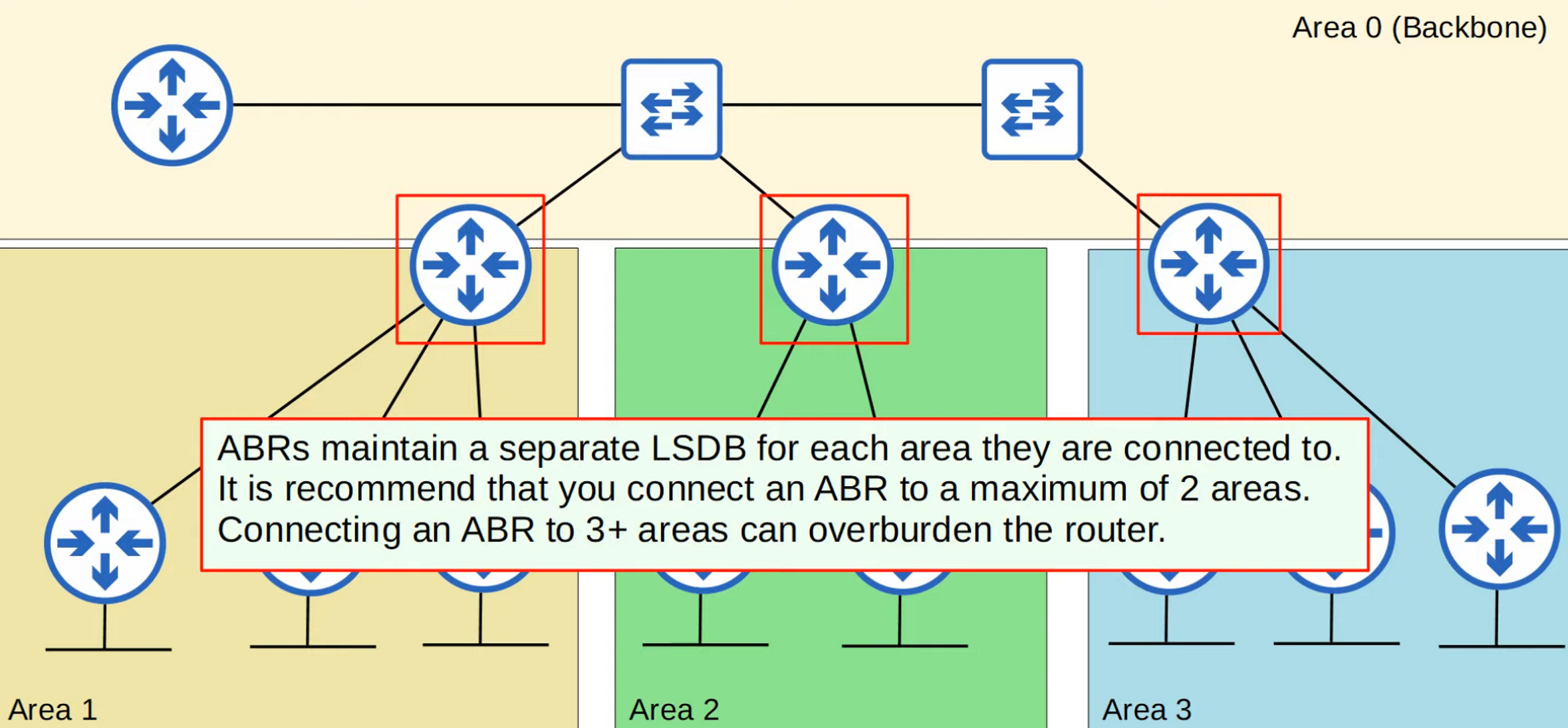
Packet types
Hello → DBD → LSR → LSU → LSAck. That’s the adjacency build in order.
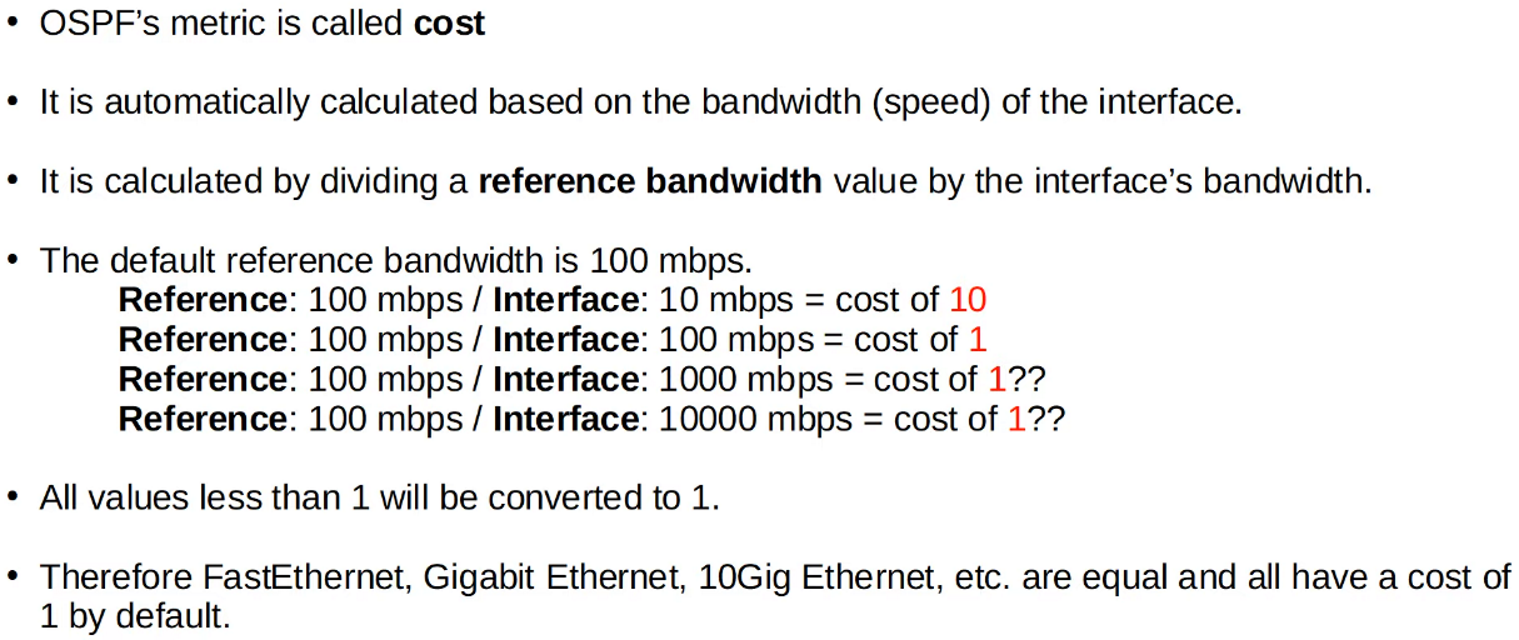
Cost & the reference-bandwidth trap
Default reference 100 Mbps → every link ≥100 Mbps costs 1. Fix with auto-cost reference-bandwidth 10000 (on every router) — and per-interface ip ospf cost beats auto-cost.
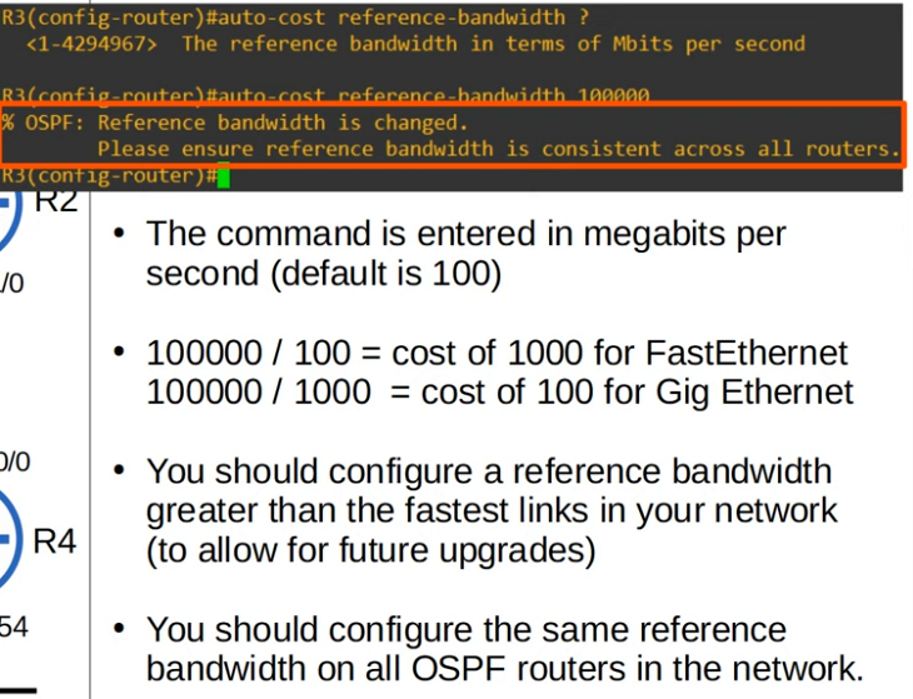
Config essentials
router ospf 1
 router-id 2.2.2.2
 passive-interface default
 no passive-interface Gi1/0/1
 network 10.10.10.0 0.0.0.3 area 0
 default-information originate